Why Your Monstera Isn't Splitting — And the Trick Nurseries Won't Tell You
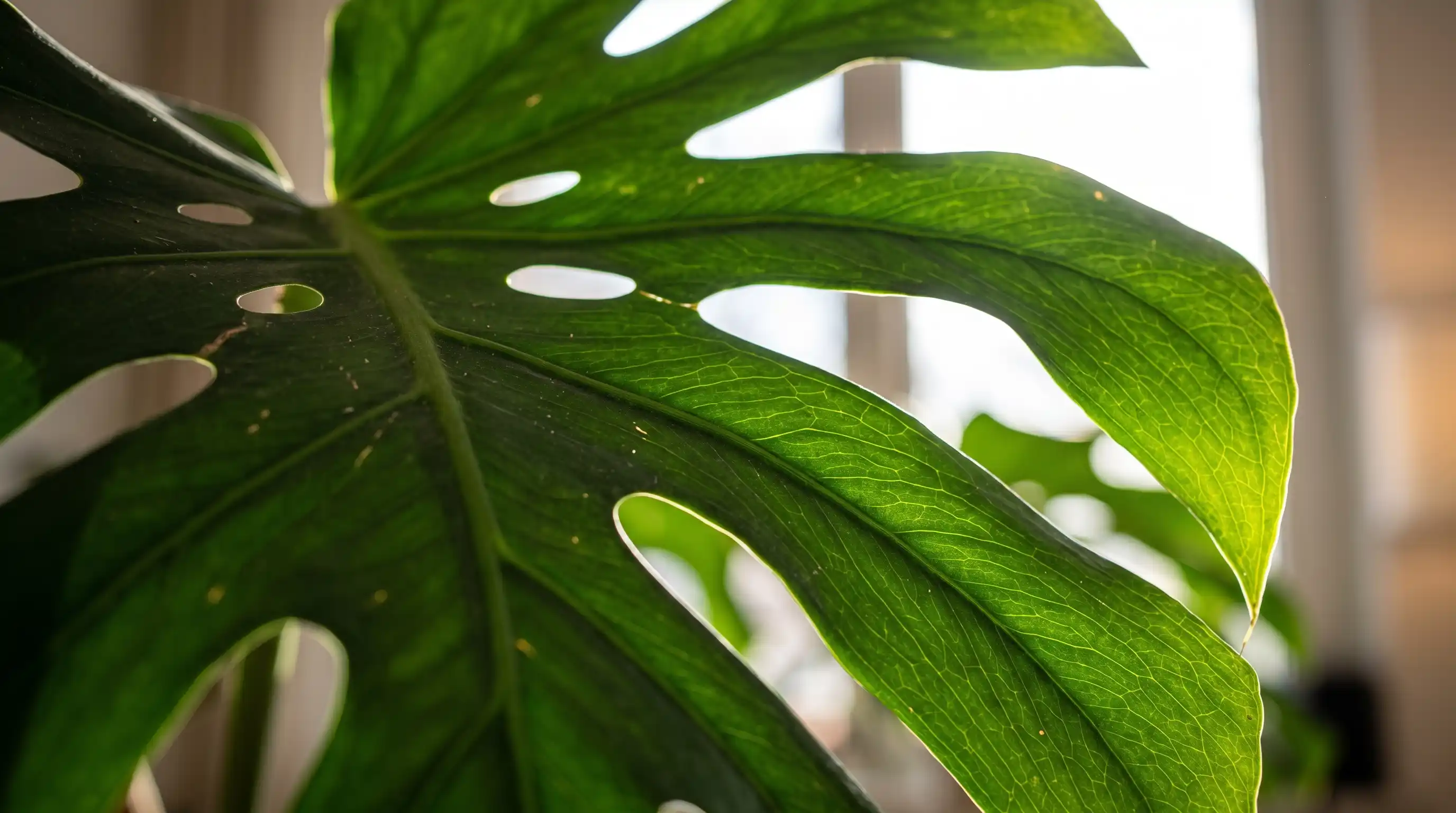
Good monstera deliciosa care comes down to three things: bright indirect light, something to climb, and water only when the top of the soil has dried out. Get those right and the famous split leaves show up on their own. Get them wrong and you can end up with a big, healthy-looking plant that produces nothing but plain, solid hearts.
So what's the "trick"? Honestly, there isn't a secret. It's light, support, and patience, and most nurseries just don't explain how much those matter. Here's how to look after your monstera properly, fix the leaves that aren't splitting, and avoid the mistakes that cause most of the yellow, droopy, sad-looking plants.
🌿 Monstera Deliciosa Care Basics
Monstera deliciosa is a climbing aroid from the tropical forests of Central America. In the wild it starts on the forest floor, finds a tree trunk, and heads upward toward the light. That one habit explains almost everything about how it wants to be treated indoors.
You don't need special equipment. A decent pot, a chunky soil mix, a bright spot and a bit of support will do it.
- Light: Bright, indirect light. Near an east-facing window or a few feet back from a brighter one is ideal.
- Water: Thorough watering once the top few centimetres of soil have dried out.
- Soil: A loose, airy mix that drains fast.
- Temperature: Normal room warmth, roughly 18–30°C. Keep it away from cold drafts and frost.
- Support: A moss pole or sturdy stake once the plant starts to stretch.
- Feeding: A diluted houseplant fertiliser in spring and summer, following the label.
💡 Helpful Hint: Monsteras grow fast when they're happy. If yours has barely produced a new leaf in months, don't reach for more water or more fertiliser first. Look at the light.
🍃 Why Your Monstera Leaves Aren't Splitting
This is the question behind most monstera searches, so let's deal with it properly. Those splits and holes have a name: fenestration. Plants don't do it on demand. Three things usually stand in the way.
1. Your plant is still young
Baby monstera leaves are solid and heart-shaped. Splits come with maturity, and the first ones are small slits near the leaf edge. If your plant is small or was recently propagated, the honest answer is that it needs time. Each new leaf is normally bigger and more cut-up than the last, as long as conditions are good.
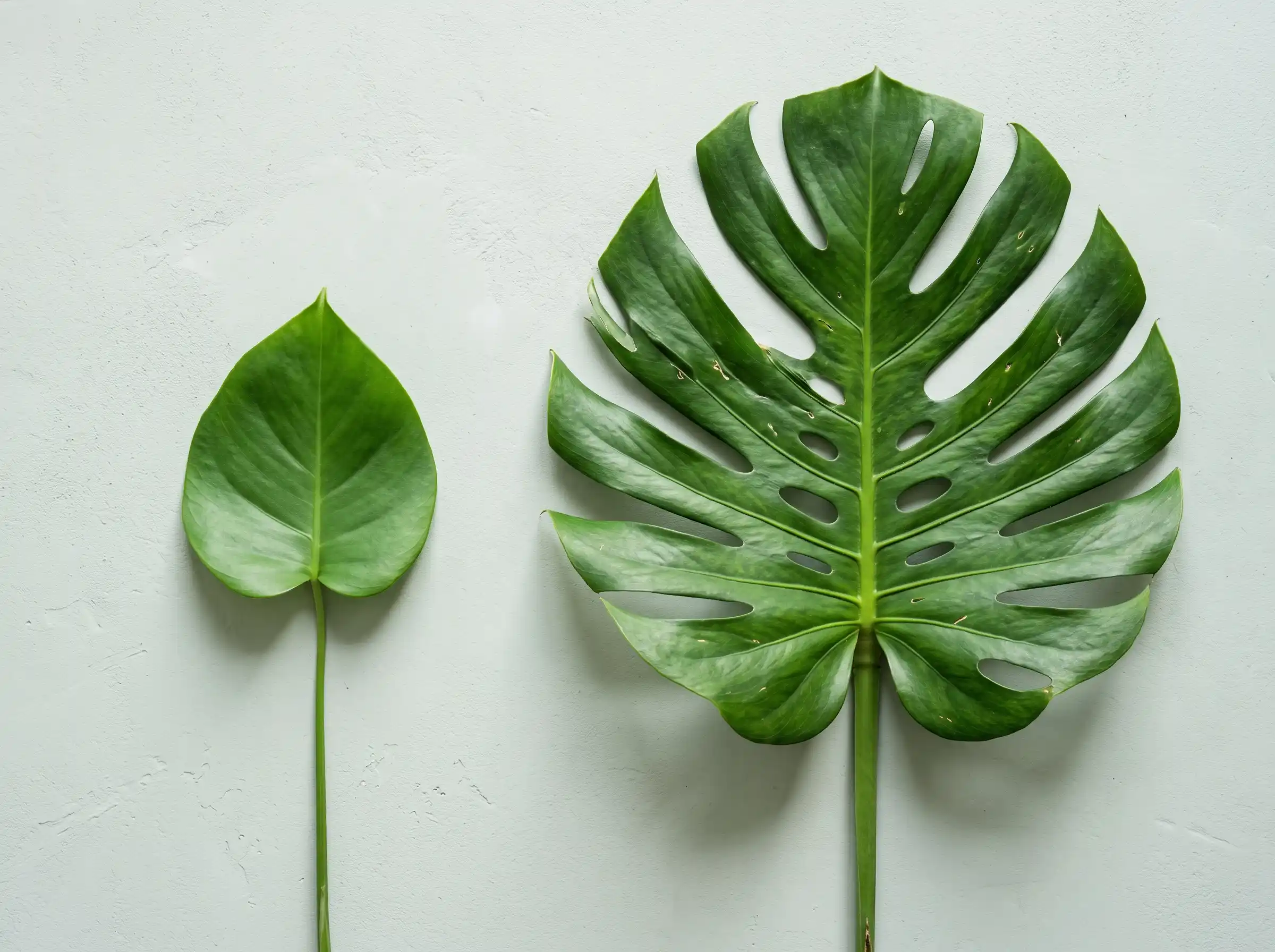
2. It isn't getting enough light
This is the big one. A monstera in a dim corner will survive, sure. But it won't have the energy to build those complicated leaves, so it keeps making simple ones, often on long, stretched stems. If the gaps between leaves are growing and the new leaves look small and plain, move the plant closer to a bright window. Keep harsh midday sun off the foliage, though. Scorched leaves aren't an upgrade.
3. It has nothing to climb
A monstera left to flop around in a pot behaves like a young plant. Give it something vertical to attach to and it usually starts putting out larger, more mature leaves. That's the next section.
Not sure your plant is actually a monstera? Plenty of split-leaf plants get sold under the same name. Our guide on how to identify a plant by leaf shape helps you check the outline, edges and veins before you start troubleshooting the wrong plant.
🪵 Do You Really Need a Monstera Moss Pole?
You don't need one to keep a monstera alive. But if you want big, properly split leaves and a plant that doesn't sprawl across your floor, a monstera moss pole is the single most useful thing you can add.
Monsteras send out aerial roots from the stem. Those roots grab onto whatever's nearby, and a pole gives them something to hold. A stable, climbing plant tends to produce larger leaves, and the pole stops heavy stems from tipping the pot over.
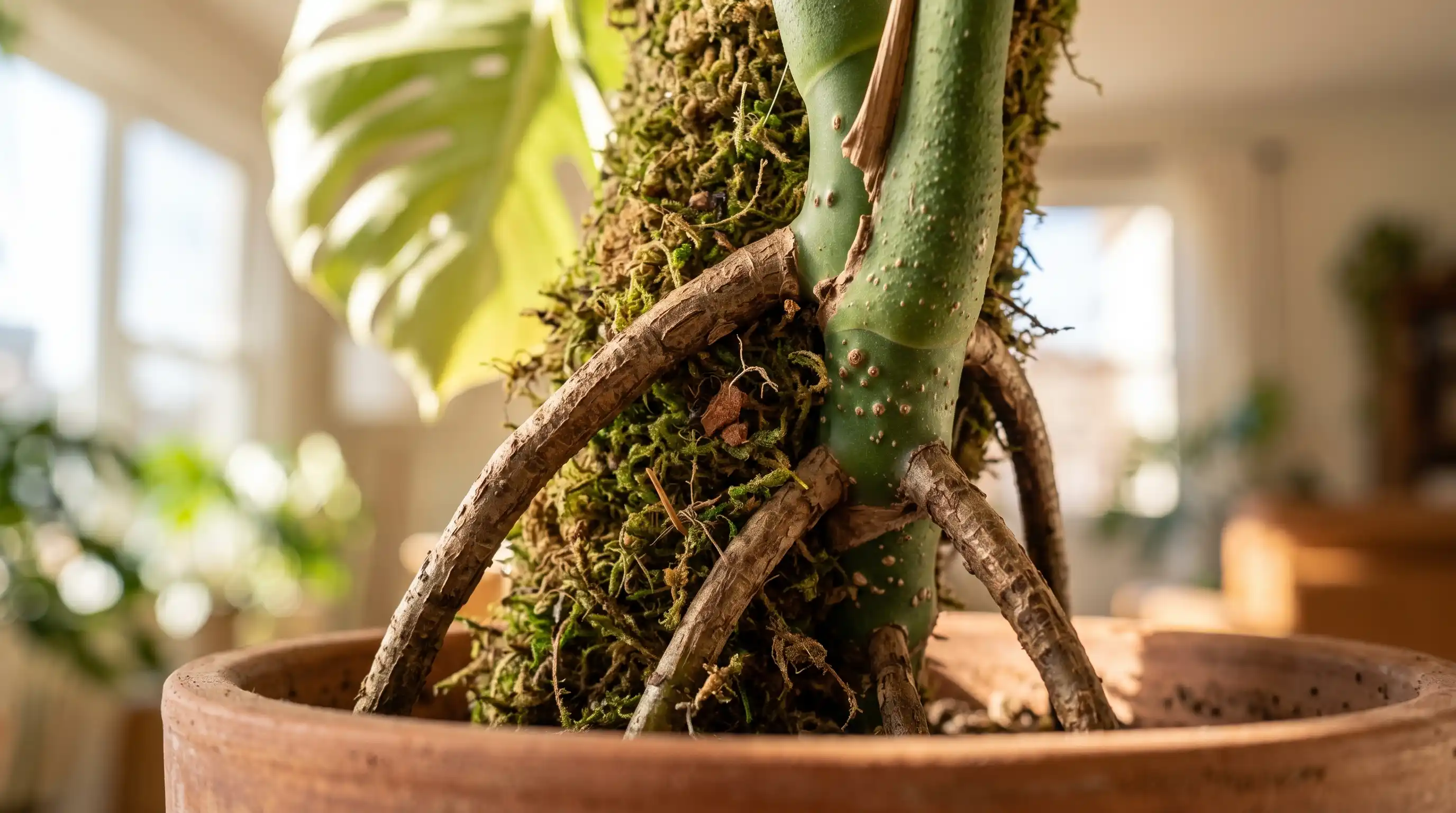
- Push the pole into the pot near the main stem, taking care not to spear the roots.
- Position the stem so the aerial roots face the pole.
- Tie the stem loosely to the pole with soft plant ties. Snug, not strangled.
- Keep adding ties as the plant grows upward.
A wooden stake or a coir pole works too. Some people keep a moss pole slightly damp so the roots grow into it. That's a nice extra, not a requirement.
💡 Helpful Hint: Don't cut off every aerial root because it looks messy. Tuck them into the pot or guide them onto the pole instead. They're how the plant anchors itself.
💧 Monstera Watering: How Often?
The biggest mistake people make with monstera watering is following a calendar. "Every Sunday" sounds tidy, but the plant doesn't care what day it is. A monstera in a warm, bright room drinks far faster than one in a cool, dim corner.
Push a finger into the soil. If the top few centimetres are dry, it's time. If it's still damp, wait.
- Check the soil with your finger before you water.
- Water slowly and evenly until it runs out of the drainage holes.
- Let the pot drain fully.
- Empty the saucer or decorative outer pot.
- Don't water again until the top layer has dried.
In a bright, warm room that often works out to roughly every week or two. In winter, when growth slows, it'll be less. Treat that as a ballpark, not a rule.
⚠️ Constantly wet soil is the fastest way to hurt a monstera. Roots need air as well as water, and soggy mix leads to yellow leaves and root rot.
One thing to know: a monstera that's gone too long without water will droop and its leaves may curl slightly. That's your cue. But don't make a habit of waiting for it.
🪴 Soil, Pots and Repotting
Because monsteras climb through bark and leaf litter in the wild, their roots like air. A standard bag of potting mix is a fine start, but mixing in perlite and some orchid bark makes it chunkier and helps it drain. Whatever you use, the pot needs drainage holes.
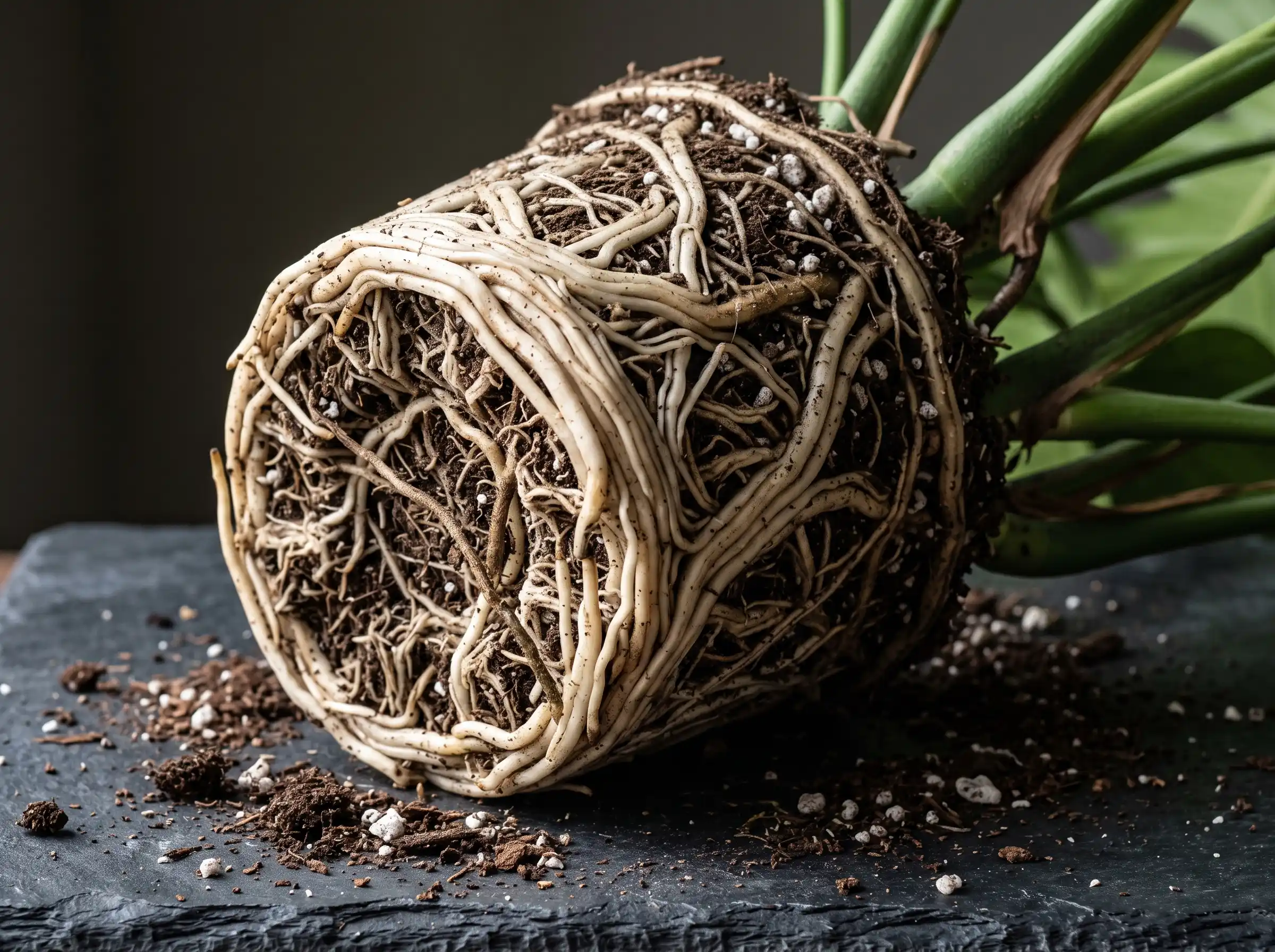
Repot when the plant tells you it's ready: roots circling the inside of the pot or poking out of the drainage holes, soil that dries out almost as soon as you water, or growth that stalls despite good light. For most healthy plants that's every year or two. Go up one pot size only. A giant pot holds a lot of wet soil around a small root ball, which is exactly what you're trying to avoid.
Spring and early summer, when the plant is actively growing, is the easiest time to do it.
🐛 Common Monstera Problems
Leaves are the best diagnostic tool you've got. Here's a quick way to read them.
| What You See | Likely Cause | What To Do |
|---|---|---|
| Yellow leaves, wet soil | Overwatering or poor drainage | Let the soil dry, check the roots, empty the saucer |
| Brown, crispy edges | Dry soil, dry air or too much direct sun | Water more evenly, move away from harsh sun |
| Small plain leaves, long gaps | Not enough light | Move to brighter indirect light |
| Drooping, dry soil | Underwatering | Water thoroughly and let it drain |
| Leaves not splitting | Young plant, low light or no support | Add light and a moss pole, then wait |
One yellow lower leaf now and then is normal. Older leaves age out. It's a pattern, like several leaves yellowing together, that needs attention.
⚠️ Check the soil before you do anything else. Yellow and drooping can look alike, but one needs less water and the other needs more.
✂️ Pruning and Propagating Your Monstera
Prune to control size or to remove damaged growth. Use clean, sharp scissors and cut just below a node, the bump on the stem where a leaf and aerial root emerge. Cutting through the middle of a node-free stretch won't give you anything useful.
The cutting is worth keeping. A piece of stem with a node, ideally with a leaf and a stub of aerial root, will root in a jar of clean water or directly in moist, airy mix. A single leaf with no node won't grow into a new plant. Roots take a few weeks, so don't give up early.
🐾 Is Monstera Toxic? And What About Look-Alikes?
⚠️ Monstera deliciosa contains calcium oxalate crystals. Chewing the leaves or stems can irritate the mouth and stomach, so keep it away from cats, dogs and small children.
And since so many split-leaf plants get confused with each other, it's worth knowing which one you actually own. Our houseplant look-alikes guide walks through how to tell similar plants apart, and the philodendron care guide covers the relatives most often mistaken for monstera.
✅ Final Thoughts
Monstera deliciosa care isn't complicated, but it does reward the right basics. Bright light and a pole beat any fancy trick. Overwatering beats almost everything else as the thing that goes wrong. And splitting leaves? They come with time, light and support.
- ✅ Give it bright, indirect light.
- ✅ Water only when the top few centimetres of soil are dry.
- ✅ Add a moss pole or stake so it can climb.
- ✅ Use a chunky, well-draining mix and a pot with drainage holes.
- ✅ Be patient. Young plants make solid leaves first.
- ✅ Keep it away from pets and children.
Not Sure It's a Monstera?
Upload a clear photo of the leaf to our free plant identifier and get a quick answer before you plan your care routine.
Identify Your Plant Now