Peace Lily Care Guide: Watering, Drooping & Blooming
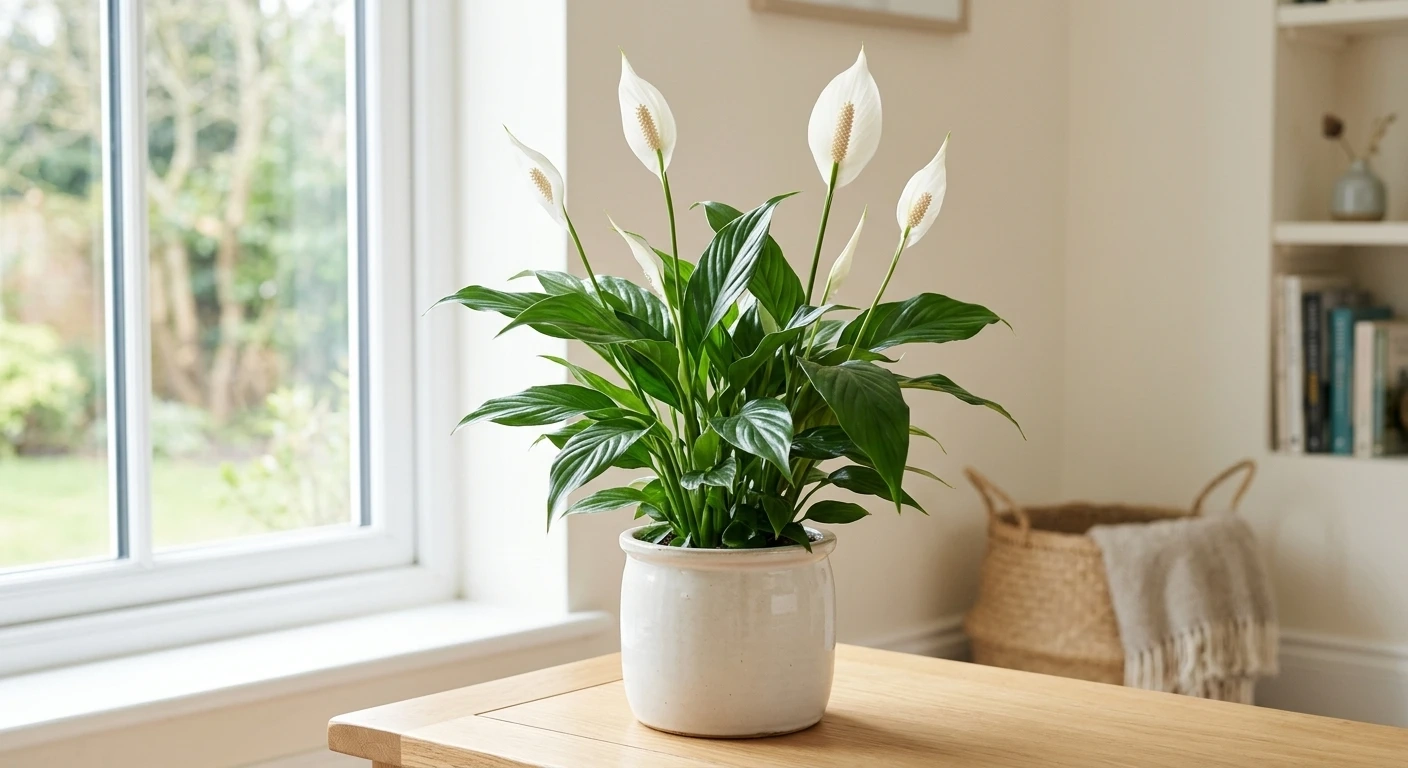
Peace lily care is relatively simple once you understand what the plant needs. Peace lilies are popular indoor plants because of their attractive dark green leaves and distinctive white flower-like blooms. They also have a useful habit of showing visible signs when their growing conditions are not ideal, making it easier for beginners to learn their care routine.
The most common questions are usually about peace lily watering, drooping leaves, and why a peace lily is not blooming. In this guide, you will learn how to provide the right light, water your plant properly, understand drooping, encourage flowering, and deal with common problems without making unnecessary changes to its environment.
🌱 Peace Lily Care Basics
Peace lilies belong to the genus Spathiphyllum and are commonly grown as indoor plants. They prefer warm indoor conditions, indirect light, and evenly moist but well-drained soil. They do not need complicated equipment or an elaborate care routine.
A good peace lily care routine starts with four things: suitable light, careful watering, good drainage, and enough space for the roots. Once these basics are right, occasional pruning and cleaning are usually all that is needed to keep the plant looking attractive.
- Place the plant in bright, indirect light when possible.
- Keep the soil lightly and consistently moist, but avoid leaving it waterlogged.
- Use a container with drainage holes.
- Protect the plant from harsh direct sunlight.
- Remove yellow or damaged leaves with clean scissors.
- Wipe dusty leaves gently so the foliage can stay clean and attractive.
💡 Helpful Hint: Peace lilies can communicate their needs through their leaves. A sudden droop often means the plant needs attention, but always check the soil before assuming it needs more water.
☀️ Light Requirements for a Peace Lily
Peace lilies generally grow best in bright, indirect light. A location near a bright window can work well if the plant is protected from intense direct sunlight. They can tolerate lower-light conditions, but growth and flowering may be slower.
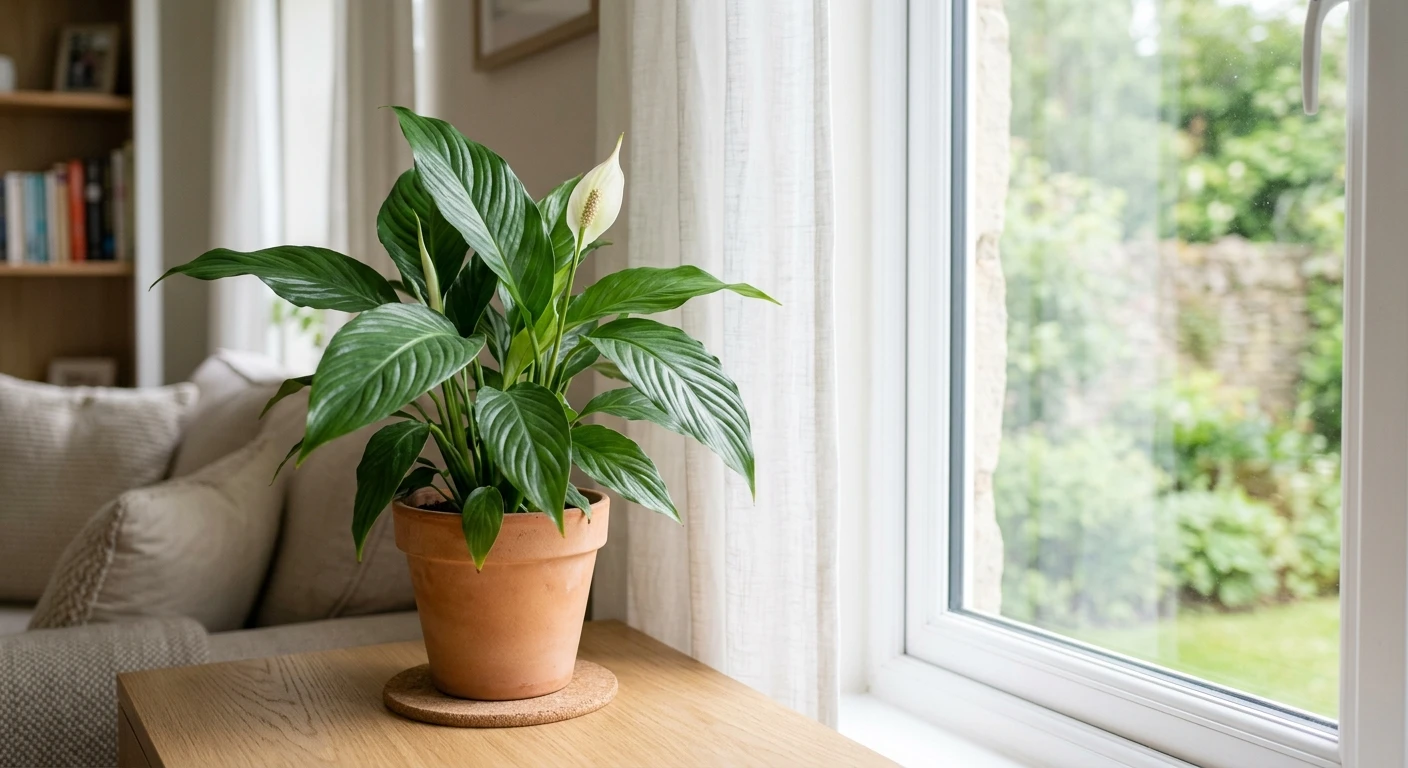
Photo needed for this slot: Source or generate a real photograph showing a peace lily beside a bright window with soft filtered light. The image should clearly demonstrate indirect indoor lighting rather than strong direct sunlight.
Bright indirect light
This is usually the best starting point for a healthy peace lily. Plenty of filtered light can support vigorous leaf growth and help the plant produce flowers when other conditions are suitable.
Low light
A peace lily may survive in a darker room, but you may notice slower growth and fewer flowers. If your plant remains healthy but rarely blooms, consider whether it is receiving enough light.
Too much direct sunlight
Strong direct sunlight can scorch the foliage, particularly when the plant is placed directly in intense sun for extended periods. If leaves develop bleached or brown patches after a change in light, move the plant farther from the window or provide filtered light.
If you enjoy identifying plants by their foliage, our guide on Identify Plant by Leaf Shape can also help you understand how leaf characteristics can be useful when identifying indoor plants.
🚿 Peace Lily Watering: How Often?
Peace lily watering is one of the most important parts of keeping the plant healthy. Peace lilies generally prefer soil that remains somewhat moist, but they should not sit in constantly saturated soil.
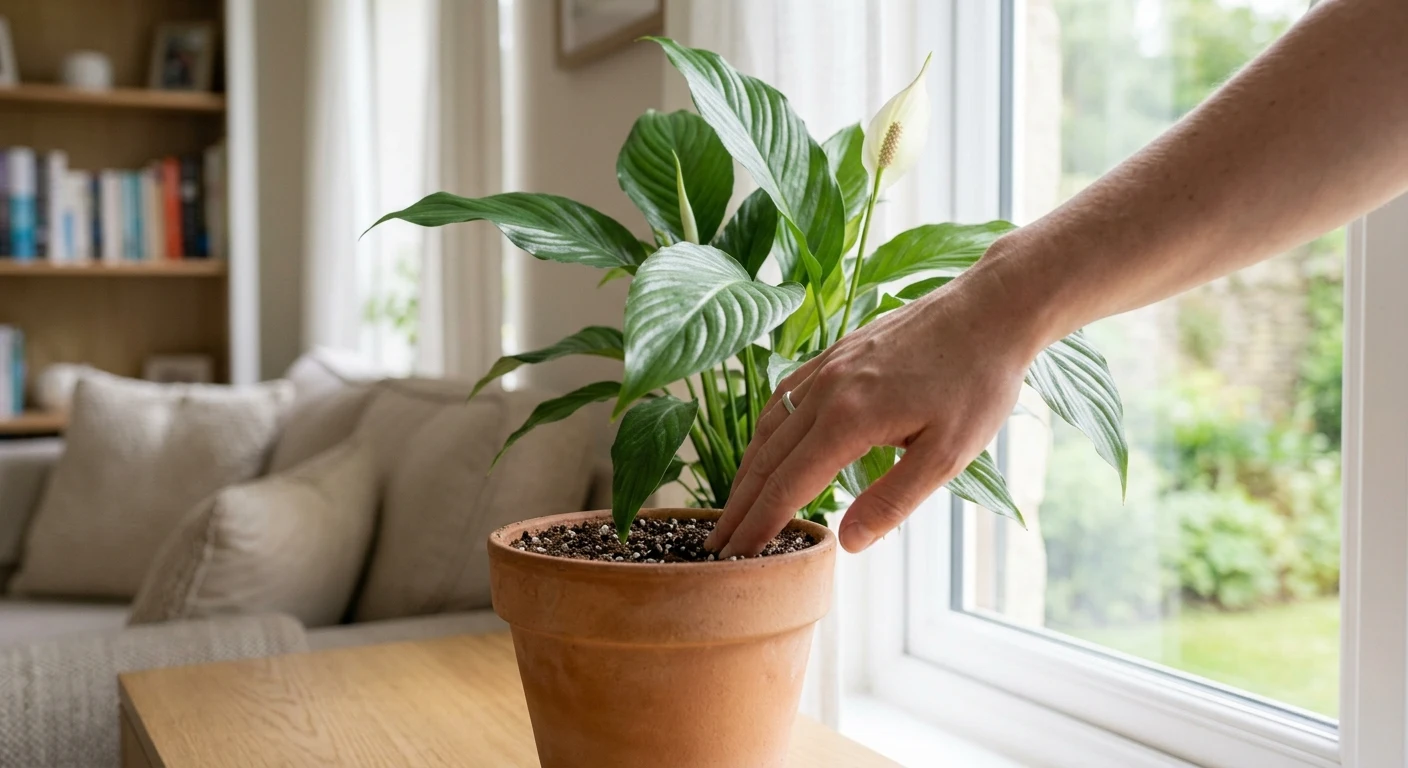
Photo needed for this slot: Source or generate a real photograph showing a person checking the soil of a potted peace lily before watering. Make the soil surface visible so the image demonstrates the moisture-checking process.
Check the soil before watering
Instead of watering according to a strict calendar, check the potting mix regularly. If the upper portion of the soil has started to dry, it is generally time to check whether the plant needs another thorough watering.
When watering, apply water evenly until some excess drains through the bottom of the container. This helps moisten the root area thoroughly. Always allow excess water to drain away and avoid letting the pot sit in collected water.
How watering changes with conditions
| Condition | What may happen | What to do |
|---|---|---|
| Bright and warm location | Soil may dry more quickly | Check moisture more frequently |
| Cooler or darker location | Soil may remain moist longer | Wait and check the soil before watering again |
| Small container or fast-draining mix | Moisture may disappear more quickly | Monitor the soil regularly |
⚠️ Avoid keeping a peace lily in constantly soggy soil. Excess moisture around the roots can lead to root problems and may cause the plant to decline.
💡 Helpful Hint: A peace lily that is drooping because the soil is dry often responds after receiving an appropriate watering. However, if the soil is already very wet, do not automatically add more water.
💧 Peace Lily Drooping: What Does It Mean?
Peace lily drooping is one of the most noticeable problems beginners encounter. The leaves may suddenly bend downward and the entire plant can look tired. Although dry soil is a common reason, drooping does not always mean the plant needs water.
When the soil is dry
If the soil feels noticeably dry and the leaves are drooping, the plant may be responding to a lack of available moisture. Give it a thorough watering and allow excess water to drain away. Avoid repeatedly giving tiny amounts of water if the entire root ball has become very dry.
When the soil is already wet
If the leaves are drooping while the soil remains very wet, watering more is not the solution. Check the drainage holes, saucer, and potting mix. Persistent wetness can stress the roots and prevent them from functioning normally.
Other possible causes
- Sudden changes in temperature or location.
- Strong direct sunlight or heat.
- Root stress caused by poor drainage.
- Environmental changes after moving the plant indoors or between rooms.
The best approach is to investigate the plant's conditions rather than treating every instance of drooping as a simple watering problem.
🌸 Why Is My Peace Lily Not Blooming?
If you have healthy leaves but a peace lily not blooming, light is one of the first growing conditions worth checking. Peace lilies need suitable light to grow and flower, and a very dark location may result in fewer blooms.
Give it enough indirect light
Move the plant to a brighter location if it is currently sitting far from windows or in a consistently dark corner. Avoid placing it directly in harsh sunlight simply to increase the amount of light. Bright, filtered light is a better starting point.
Keep watering consistent
Repeatedly allowing the plant to become severely dry or keeping it constantly saturated can create stress. Aim for a consistent routine based on the moisture of the potting mix and the conditions around the plant.
Consider the plant's overall condition
Flowering should not be the only measure of plant health. A peace lily with healthy foliage and strong growth may simply need more suitable conditions before producing new blooms. Avoid repeatedly applying extra fertiliser or making several changes at once simply because flowers are not appearing.
💡 Helpful Hint: If your peace lily is healthy but not flowering, gradually improve its light conditions and keep its watering consistent. Give the plant time to respond rather than changing several factors at once.
🪴 Soil, Potting and Repotting
A peace lily benefits from a potting mix that holds some moisture while still allowing excess water to drain. The container should have drainage holes to reduce the risk of water remaining around the roots.
When should you repot?
Peace lilies do not need to be repotted simply because a certain amount of time has passed. Look for signs that the plant has outgrown its container, such as a crowded root system, very rapid drying of the potting mix, or roots emerging from drainage holes.
When repotting, choose a container only moderately larger than the existing one. A dramatically oversized pot can hold a larger volume of wet soil, which may take longer to dry.
✂️ Pruning and Cleaning Peace Lily Leaves
Regular maintenance helps keep a peace lily looking tidy. Remove yellow, brown, or badly damaged leaves using clean scissors or pruning shears. Cut the leaf stalk close to the base without unnecessarily damaging healthy growth.
Dust can also collect on broad peace lily leaves. Gently wiping the leaves with a clean, damp cloth can improve their appearance and remove accumulated dust. Handle the foliage carefully because damaged leaves can develop brown marks.
- Remove leaves that are completely yellow or badly damaged.
- Trim spent flower stalks when the bloom has finished.
- Use clean cutting tools when pruning.
- Gently wipe dusty leaves when necessary.
- Avoid removing healthy leaves simply because they are older.
If you also keep other easy-care indoor plants, our Snake Plant Care Guide has practical advice for caring for another popular houseplant.
🍃 Common Peace Lily Problems
Most peace lily problems can be investigated by looking at the combination of light, soil moisture, drainage, temperature, and recent changes in location.
Yellow leaves
An occasional older leaf turning yellow is not necessarily a serious problem. However, widespread yellowing can indicate that the plant is experiencing stress. Check whether the soil remains wet for long periods and whether the container drains properly.
Brown leaf tips
Brown tips can have multiple causes, including dry conditions, inconsistent watering, excessive light, or environmental stress. Rather than immediately changing one factor, review the plant's overall growing conditions.
Leaves turning pale
Pale foliage can sometimes be associated with excessive light, although other factors can also affect leaf colour. If the plant is exposed to strong direct sunlight, try moving it to a position with softer indirect light.
Root problems
Roots that remain in waterlogged soil for extended periods can become stressed. Poor drainage and frequent watering without allowing the potting mix to dry appropriately can contribute to this problem.
⚠️ Peace lilies contain insoluble calcium oxalates and should be kept away from pets and children who may chew or ingest plant material.
Final Thoughts
Good peace lily care does not require a complicated routine. Give your plant bright indirect light, monitor the soil before watering, provide good drainage, and pay attention to changes in the leaves. If your peace lily is drooping, check the soil first rather than automatically adding more water.
For a peace lily that is not blooming, start by checking its light and overall growing conditions. Healthy foliage, appropriate moisture, and suitable indirect light provide a good foundation for flowering.
- ✅ Keep your peace lily in bright, indirect light.
- ✅ Check soil moisture before watering.
- ✅ Avoid both severely dry soil and constantly soggy conditions.
- ✅ Investigate peace lily drooping before adding more water.
- ✅ Give a non-blooming plant suitable light and consistent care.
- ✅ Use a well-draining pot and remove standing water.
- ✅ Prune damaged leaves and spent flower stalks when needed.
