Pothos Care: Watering, Light & Propagation Guide
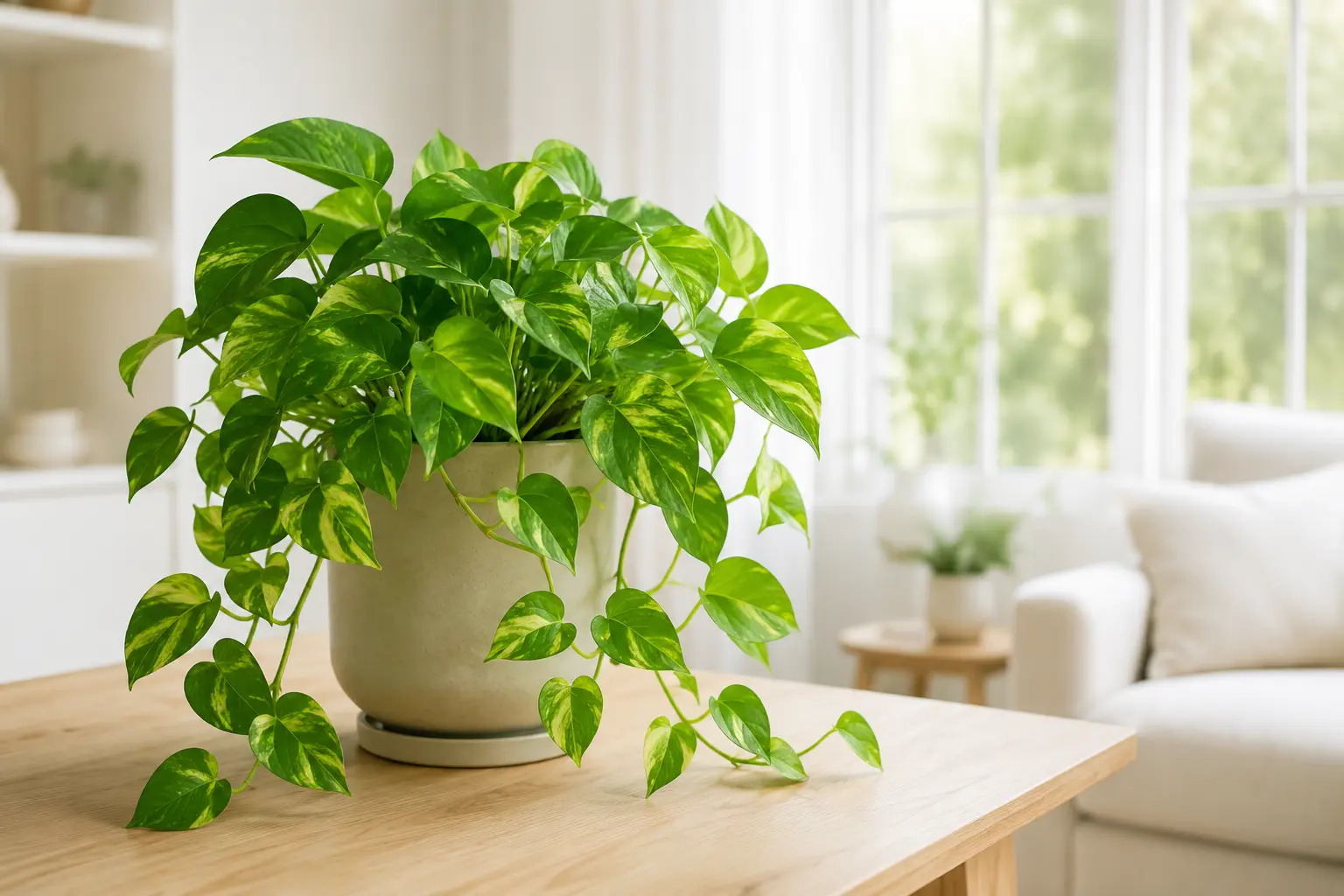
Good Pothos Care doesn't need a complicated routine. Give your pothos bright enough light, water it when the soil starts to dry, and don't leave its roots sitting in soggy soil. That's the basic formula. These forgiving plants are popular for a reason: even if you forget about them for a little while, they usually bounce back.
Still, "easy to grow" doesn't mean "impossible to kill." Overwatering, very dark corners, and poor drainage are three common reasons a pothos starts looking unhappy. Here's how to keep yours healthy, bushy, and growing without turning plant care into a daily chore.
🌿 Pothos Care Basics
Pothos plants, commonly sold under names such as devil's ivy, are tropical vines known for their heart-shaped leaves and long trailing stems. They're happy in normal indoor conditions and don't demand constant attention.
Your plant will do best when you pay attention to what the leaves and soil are telling you rather than following a rigid watering calendar. A plant sitting in a warm, bright room will dry out differently from one kept several metres away from a window.
- Light: Bright, indirect light is ideal for steady growth.
- Water: Water thoroughly when the upper part of the soil has dried.
- Soil: Use a loose, well-draining potting mix.
- Temperature: Keep it comfortably warm and away from cold drafts.
- Humidity: Average indoor humidity is usually fine, although higher humidity can support lush growth.
- Feeding: Fertilise during active growth according to the instructions for your chosen houseplant fertiliser.
☀️ Choosing the Right Light for Pothos
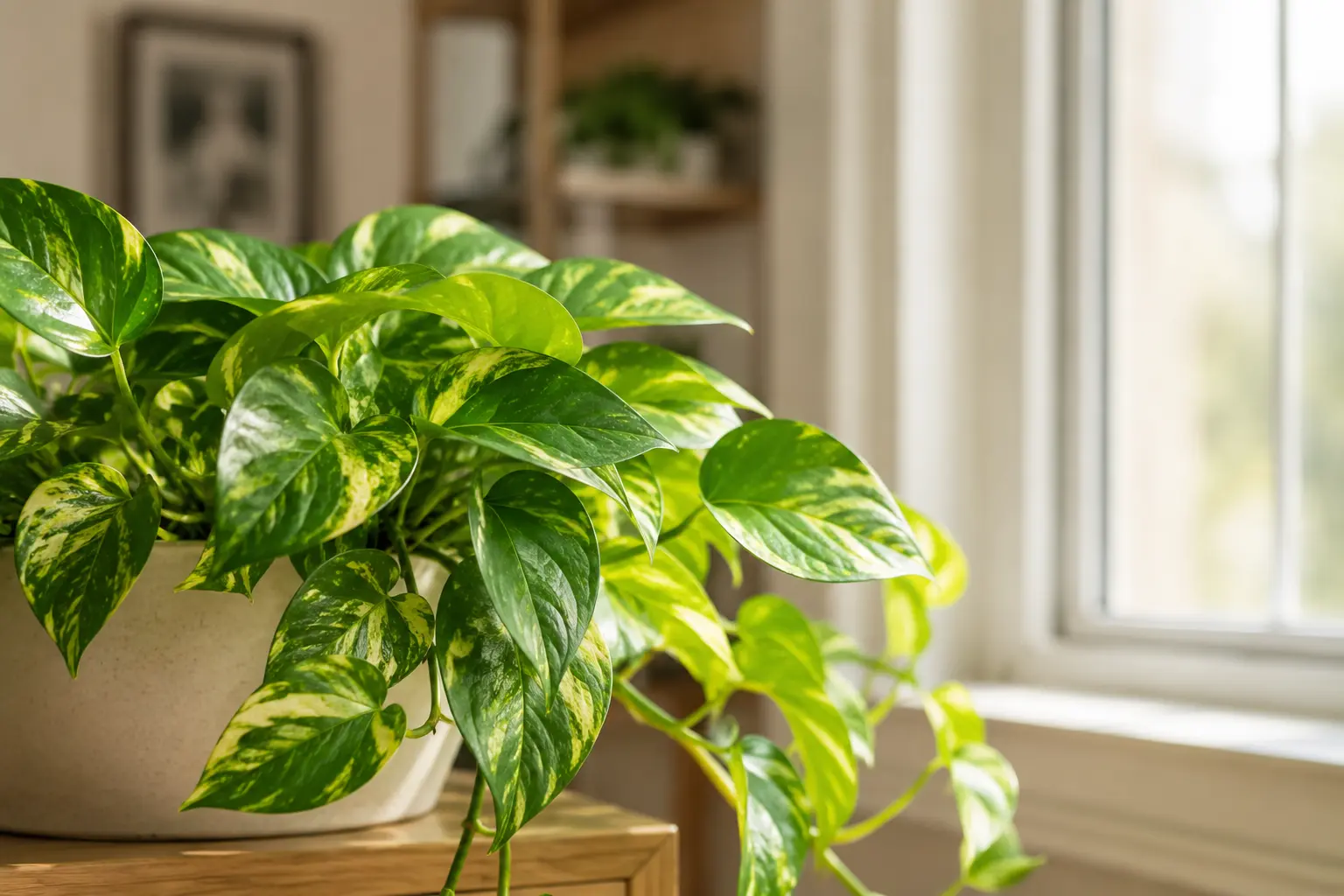
Pothos is adaptable, but light still matters. Bright, indirect light generally gives you the best combination of healthy growth, attractive leaves, and good colour. A spot near a window where the plant receives plenty of filtered daylight is usually a good starting point.
Low light won't necessarily kill a pothos. Growth simply tends to slow down, and the stems can become long and sparse as the plant reaches for available light. Variegated varieties have an extra reason to receive good light: insufficient light can cause new growth to show less variegation.
⚠️ Avoid placing your pothos where strong, direct midday sunlight hits the leaves for long periods. Intense direct sun can scorch the foliage.
If you're unsure about the amount of light in a room, observe the plant over a few weeks. New leaves that are healthy and reasonably sized are a good sign. If growth becomes very slow and the stems stretch noticeably between leaves, try moving the plant closer to a bright window while keeping harsh direct sunlight off the foliage.
Not sure what your plant is based on its foliage? You can also identify plant by leaf shape to learn how leaf characteristics can help with plant identification.
💧 How to Water a Pothos
Watering is where many pothos problems begin. The biggest mistake people make is watering on a fixed schedule without checking the soil first. Your pothos doesn't know that it's "watering day."
Instead, check the potting mix with your finger. If the top portion feels dry and the soil below is beginning to dry as well, it's usually time to water. When you do water, give the plant a thorough drink until excess water runs through the drainage holes.
- Check the soil before watering.
- If the soil has dried sufficiently, water slowly and thoroughly.
- Let excess water drain completely from the pot.
- Empty any water collected in a saucer or decorative outer pot.
- Wait until the soil has dried again before watering.
A pothos that is thirsty often develops soft, drooping leaves. That's a useful signal, but don't wait for severe wilting every time. Repeatedly allowing the plant to become extremely dry can put unnecessary stress on it.
⚠️ Yellowing leaves, persistently wet soil, and a sour-smelling potting mix can point to overwatering or poor drainage. Check the roots and soil rather than simply adding more water.
🪴 Soil, Potting and Repotting
Pothos isn't particularly fussy about soil, but it doesn't like compacted, waterlogged roots. Choose a good-quality houseplant potting mix that drains freely. If the mix stays wet for a long time after watering, the container or soil may need attention.
When should you repot?
You don't need to repot a pothos just because it has been in the same container for a certain number of months. Look for signs instead: roots circling heavily around the root ball, roots emerging from drainage holes, very slow growth despite good care, or soil that dries unusually quickly.
When repotting, choose a container only modestly larger than the current one. A huge pot holds more wet soil around the roots and can make overwatering easier. Make sure the new container has drainage holes.
✂️ Pruning for Bushier Pothos
Want a pothos that looks full rather than a few long vines hanging from the pot? Pruning helps. Use clean, sharp scissors or pruning shears to cut back overly long or bare stems.
Make your cut just above a leaf node. The node is the point where a leaf and aerial root can emerge from the stem. Pruning encourages the plant to produce new growth from nodes farther back along the vine, helping create a fuller appearance over time.
Don't throw away every healthy cutting. Those pieces can become new plants.
🌱 How to Propagate Pothos
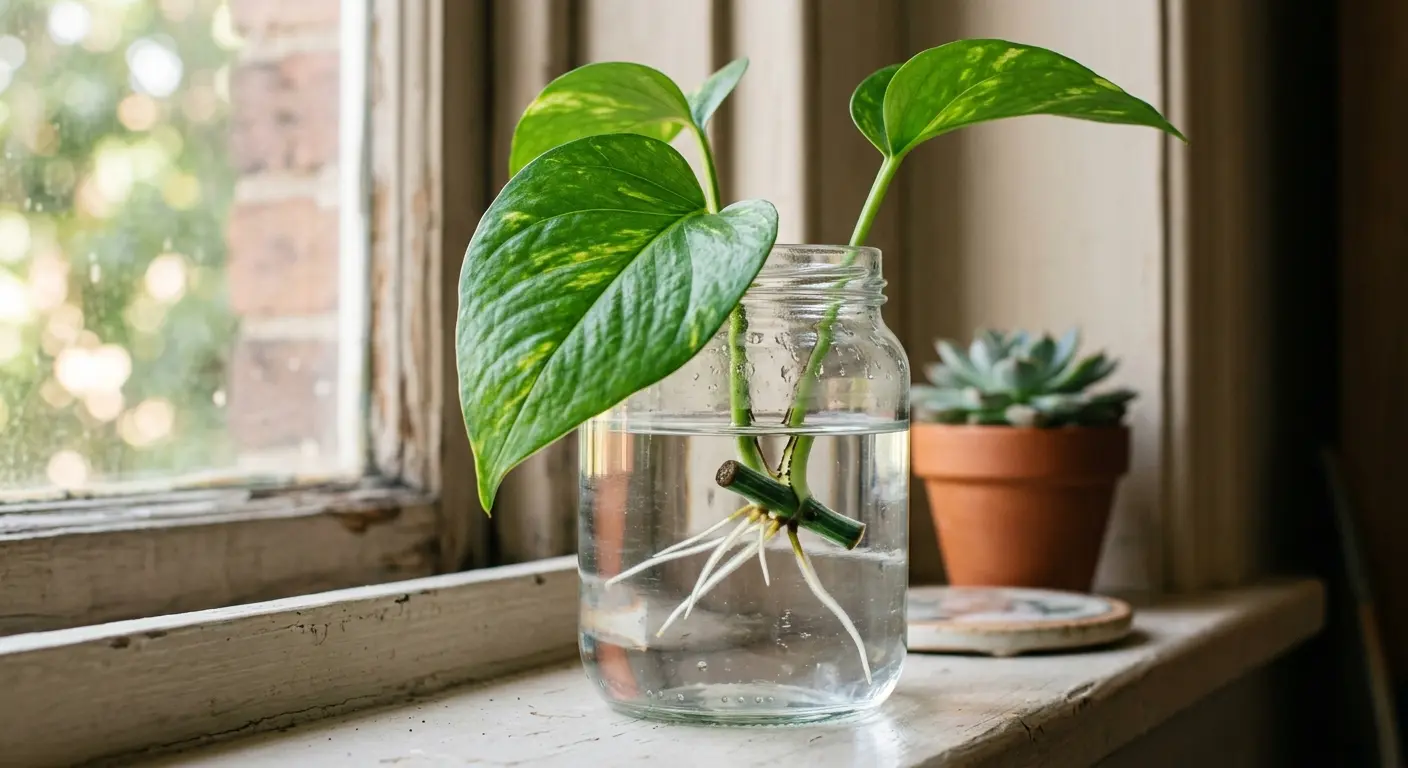
Pothos is one of the easiest houseplants to propagate from stem cuttings. Water propagation is particularly simple because you can watch the roots develop before transferring the cutting to soil.
Water propagation
- Choose a healthy vine with several leaves.
- Cut a section of stem containing at least one healthy node.
- Remove the leaf closest to the cut end if it would sit underwater.
- Place the node in a clean container of water while keeping the leaves above the water.
- Put the cutting in bright, indirect light.
- Change the water regularly so it stays clean.
- Once a useful root system has developed, move the cutting into a suitable potting mix.
The node is the key. A leaf by itself won't produce a new pothos plant because it doesn't contain the stem tissue needed for new growth. Keep at least one node on every cutting you intend to propagate.
Propagating directly in soil
You can also place a fresh cutting directly into moist potting mix. Make sure at least one node is in contact with the mix, keep the medium lightly moist rather than saturated, and provide bright indirect light. This method skips the water-to-soil transition, although you won't be able to watch the roots develop.
🐛 Common Pothos Problems
Yellow leaves
An occasional older yellow leaf isn't necessarily a disaster. If several leaves are turning yellow while the soil stays wet for long periods, however, review your watering habits and drainage first. Too much moisture around the roots is a common culprit.
Brown leaf tips
Brown edges can have several causes, including inconsistent watering, dry indoor air, excessive fertiliser, or environmental stress. Check the overall condition of the plant rather than assuming one cause immediately.
Long, bare vines
Sparse growth often means the plant isn't receiving enough useful light or hasn't been pruned for a long time. Move it to a brighter indirect-light location and trim back overly long stems to encourage a fuller shape.
Drooping leaves
Check the soil before reaching for the watering can. Dry soil can cause drooping, but soggy soil can also lead to stressed roots and unhealthy foliage. The same symptom doesn't always have the same cause.
🌿 Pothos Care Through the Seasons
Your watering routine shouldn't stay exactly the same all year. During periods of active growth, a pothos often uses water more quickly. In cooler or darker conditions, growth slows and the potting mix can remain wet for longer.
That means you should check the soil more often than you follow a calendar. If your home gets less natural light during part of the year, resist the temptation to keep watering at the same frequency as before.
Fertilising is also best matched to active growth. Follow the label directions of your houseplant fertiliser and avoid applying extra fertiliser in the hope of forcing faster growth. More isn't better here.
✅ Final Thoughts
Pothos rewards a simple routine. Give it enough light, let the soil dry between thorough waterings, provide good drainage, and prune it when the vines become too long. If you want more plants, save healthy stem cuttings and propagate them.
- ✅ Give pothos bright, indirect light for strong growth.
- ✅ Check the soil before watering instead of following a fixed schedule.
- ✅ Use a pot and soil that drain well.
- ✅ Prune long vines above leaf nodes for a fuller shape.
- ✅ Propagate using stem cuttings that contain at least one node.
- ✅ Watch the plant's leaves and soil for clues when something looks wrong.
